Composite Decking Installation from A–Z
Complete Step-by-Step Guide for a Solid, Long-Lasting Deck
Installing composite decking correctly starts long before the first board is laid. From planning and design to building a strong timber subframe and fixing the decking boards, every stage plays a crucial role in the durability, stability, and final appearance of your deck.
In this guide, I’ll walk you through the entire composite decking installation process from A to Z, based on a real project installed over concrete slabs, using a solid timber frame and Eva-Last T Composite Infinity Deck Boards. Detailed photos can be added at each stage to clearly show how the work was carried out.
Design & Planning: The Foundation of a Successful Deck
Before starting any decking installation, proper planning and design are essential.
Key things to consider at this stage include:
-
The size and shape of the deck
-
How the deck will connect to the house or garden
-
Drainage and water run-off
-
Board direction (lengthways or widthways)
-
Finished deck height relative to doors and thresholds
-
Expansion gaps required for composite decking
Taking time to plan helps avoid costly mistakes later and ensures the deck looks good and performs well for many years.

Stage 1: Surface Preparation – Working with Concrete Slabs
In this project, the decking was installed over existing concrete slabs. Even though slabs provide a solid base, they still need careful preparation.
Key steps:
-
Inspect slabs for movement or damage
-
Ensure adequate drainage
-
Clean the surface thoroughly
-
Identify high and low points
Finding the correct level is critical. Any unevenness in the base will transfer to the decking if not corrected at the framing stage.
Stage 2: Setting Levels and Creating a Stable Base
Once the slab surface is prepared, the next step is to establish a consistent and level framework.
This involves:
-
Marking out finished deck height
-
Accounting for joist depth and decking board thickness
-
Allowing airflow beneath the deck
A solid, level base frame is essential to prevent movement, sagging, or uneven boards over time.

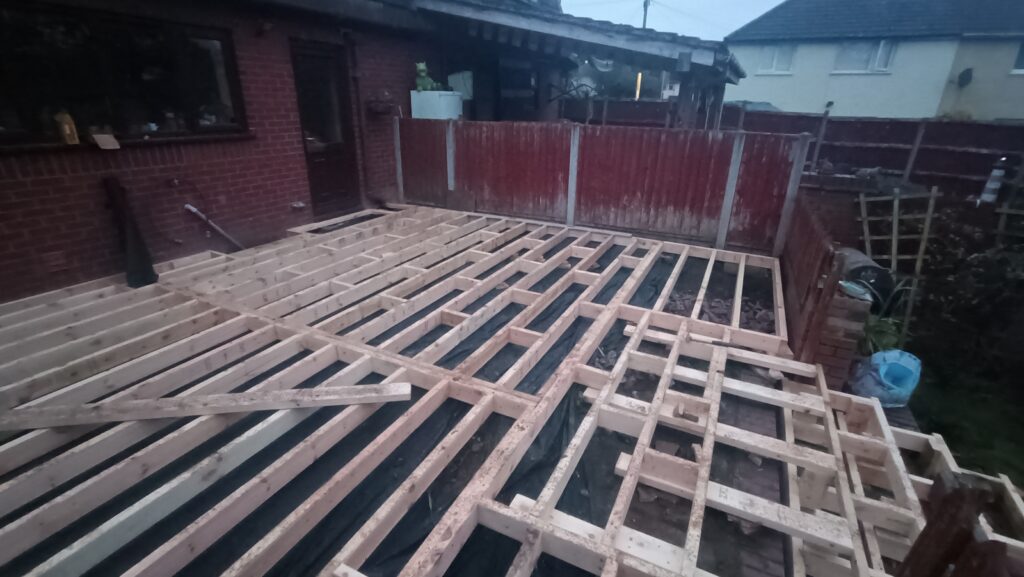
Stage 3: Building the Timber Subframe for Composite Decking Installation
The timber subframe is the structural backbone of the deck.
Timber Used:
-
47 x 150mm Kiln Dried Carcassing C16/24
-
Fixed using 150mm wood screws
This size provides excellent strength and rigidity, especially important when installing composite decking, which is heavier than traditional timber decking.
Framing Process:
-
Construct the outer frame first
-
Add internal joists at consistent centres
-
Ensure all joists are square and level
-
Secure all connections with long structural wood screws

Stage 4: Supporting the Frame for Strength and Stability
To ensure the frame is solid and stable, the structure must be supported at multiple points.
Support methods include:
-
Spreading the load evenly across the slabs
-
Using packers or supports where necessary
-
Preventing direct timber-to-ground contact where possible
-
Ensuring no unsupported spans that could flex
This step is crucial for long-term performance and to prevent bounce or movement when walking on the deck.

Stage 5: Final Frame Checks Before Laying Decking
Before installing composite decking boards, always carry out final checks:
-
Confirm all joists are level
-
Double-check spacing
-
Ensure fixings are tight
-
Remove debris from the frame
A well-built frame makes the decking installation faster, easier, and more accurate.
Stage 6: Installing Composite Decking Boards
Decking Used:
Eva-Last T Composite Infinity Deck Board
Size: 25.4 x 135 x 2200mm
Eva-Last composite decking is known for its durability, low maintenance, and clean, modern appearance.
Installation Tips:
-
Follow manufacturer spacing guidelines
-
Allow for thermal expansion
-
Maintain consistent board alignment
-
Use the correct fixings or clips as specified
-
Keep edges straight and clean
Work methodically, checking alignment regularly to achieve a professional finish.


Stage 7: Finishing Touches and Final Inspection
Once all boards are installed:
-
Check expansion gaps
-
Inspect fixings
-
Clean the deck surface
-
Add trims or edging if required
These final details improve both appearance and longevity.


Why a Proper Subframe Matters for Composite Decking
One of the most common causes of decking failure is a poorly constructed base. A strong timber subframe:
-
Prevents movement and sagging
-
Improves load distribution
-
Extends the lifespan of composite boards
-
Ensures a safe, solid walking surface
Investing time in the frame pays off for years to come.
Final Thoughts
Composite decking installation isn’t just about laying boards — it’s about design, planning, preparation, and precision. By building a solid timber frame using quality materials and following a structured installation process, you can achieve a deck that looks great and lasts for decades.
With clear stages and detailed photos, this guide shows exactly how to install composite decking the right way — from surface preparation to the final board.
For more info, have a look at our Facebook, you will find there some more examples of our work. For more info about us, just click here